Resolving disputes
Nonviolent Communication
Four steps that turn an accusation into a statement about your own situation. It sounds simple and is the hardest exercise in an argument
Key points at a glance
- Nonviolent Communication is a conversation model that Marshall B. Rosenberg developed from the 1960s onwards.
- It follows four steps: observe instead of judging, name the feeling, name the need, ask for something concrete.
- The aim is not to change the other person but a connection in which the needs of both sides count.
- One person is enough to start; practice makes the steps reliable in an argument.
In numbers
4
steps
observation, feeling, need, request
1
person is enough to start
the method needs no agreement
0
preconditions
no procedure, no appointment, no third person
Prepare one sentence
Before the next difficult conversation, write one sentence that only describes what happened, without a single word of judgement.
Translate a demand
Take a concern from demand to need on paper: “He should keep me informed” becomes “I need reliability in my planning”.
Use it when listening
Apply the four steps to what the other person says as well. In that direction they often work faster.
Practise with others
Under pressure you fall back into old habits. The steps become reliable through practice, ideally in pairs or in a group.
As a judgement
- Observation
- “You really are unfriendly.”
- Feeling
- left unsaid
- Need
- left unsaid
- Request
- none, only a reproach
In four steps
- Observation
- “I have now heard no three times in answer to my questions.”
- Feeling
- “I am irritated,”
- Need
- “because I would like to understand what is going on.”
- Request
- “Please tell me what you need so we can move on with this?”
1934
Born in the USA
Rosenberg is born on 6 October and grows up in Detroit.
1960s
The model takes shape
He develops “Nonviolent Communication” and works with the American civil rights movement.
1984
His own centre
Rosenberg founds the Center for Nonviolent Communication.
2001
The book in German
The German edition of his core work appears with the publisher Junfermann.
2011
Retirement
By then he has given trainings in more than 60 countries.
2015
Death at 80
Rosenberg dies on 7 February.
- Origin
- Developed by the psychologist Marshall B. Rosenberg from the 1960s
- Where it is used
- Everyday life, work, school, family, mediating between groups
- What it takes
- Usable without preparation, reliable only with practice
- Third party
- No third person needed, one side can begin
- Author
- Johannes Max Harms
What is Nonviolent Communication?
Nonviolent Communication is a model of conversation developed by the psychologist Marshall B. Rosenberg. It orders a statement into four steps: the observation without judgement, your own feeling, the need behind it, and a concrete request.
The name is misleading and regularly draws objections. What is meant is not a renunciation of clarity but of the forms that reliably end a conversation: accusation, generalisation, imputing motives.
The four steps are not a script but a frame. They serve as orientation for expressing your own feelings and needs while taking in the other side. Recited word for word they sound artificial; understood, they change the direction of a conversation.
How does Nonviolent Communication work in a conversation?
The decisive move is in the first step. An observation can be checked, a judgement cannot. Whoever opens with a judgement gets a defence and then negotiates about the judgement rather than the matter.
The second and third steps move the conversation from the person to the situation. As long as two sides talk about demands, two positions face each other that may be mutually exclusive. At the level of needs that is rarer: reliability and freedom do not exclude each other, a fixed time and no fixed time do.
The fourth step keeps the result small. A request concerns the next concrete situation, not the character of the other person. That makes it fulfillable, and fulfillability is the difference between a request and a complaint.
When does Nonviolent Communication fit, and when not?
It fits when both sides will go on dealing with each other: in families, teams, neighbourhoods, clubs. There a dispute is usually not a single incident but a pattern, and a pattern can be changed through language.
It also fits as a one-sided start. Unlike a procedure it needs no agreement from the other side, no appointment and no third person. One side can begin, and that is its practical advantage over every other method in this series.
It does not fit where there is immediate danger, violence, or a clear imbalance of power in which one side cannot state its situation openly without risking harm. There, safety comes before the form of conversation.
Where are the limits of Nonviolent Communication?
The first limit is practice. Calm, the four steps are obvious; in an argument they are hard. Anyone who has only read about them falls back under pressure into the familiar pattern. That is not an objection to the method but a realistic expectation.
The second limit is the effect on the other person. The method improves what arrives; it does not compel an answer. Someone who does not want to talk still does not want to after four well-formed steps.
The third limit is structural. Where a conflict arises from unequal rights, money or responsibilities, a form of speech changes none of that. It makes the conflict discussable; resolving it takes a decision, a procedure or an agreement.
How do you start with Nonviolent Communication?
With a single rephrasing, not with the whole model. Before the next difficult conversation, prepare one sentence that only describes what happened, without a word of judgement. That alone changes the opening.
After that it helps to translate your own concerns once, in writing, from demands into needs. "He should keep me informed" becomes "I need reliability in planning". The second version allows several solutions, the first only one.
And a point that comes up in every course: the method is first a tool for listening, not for speaking. The four steps can be applied to what the other person says as well, and in that direction they often work faster.
- Nonviolent Communication: ten examplesTen everyday examples, each as a reproach and in four steps
- Feelings list of Nonviolent Communication91 feelings in 15 groups, plus ten pseudo-feelings and how to translate them
- Needs list of Nonviolent Communication58 needs in nine groups, plus eight strategies and the need behind each
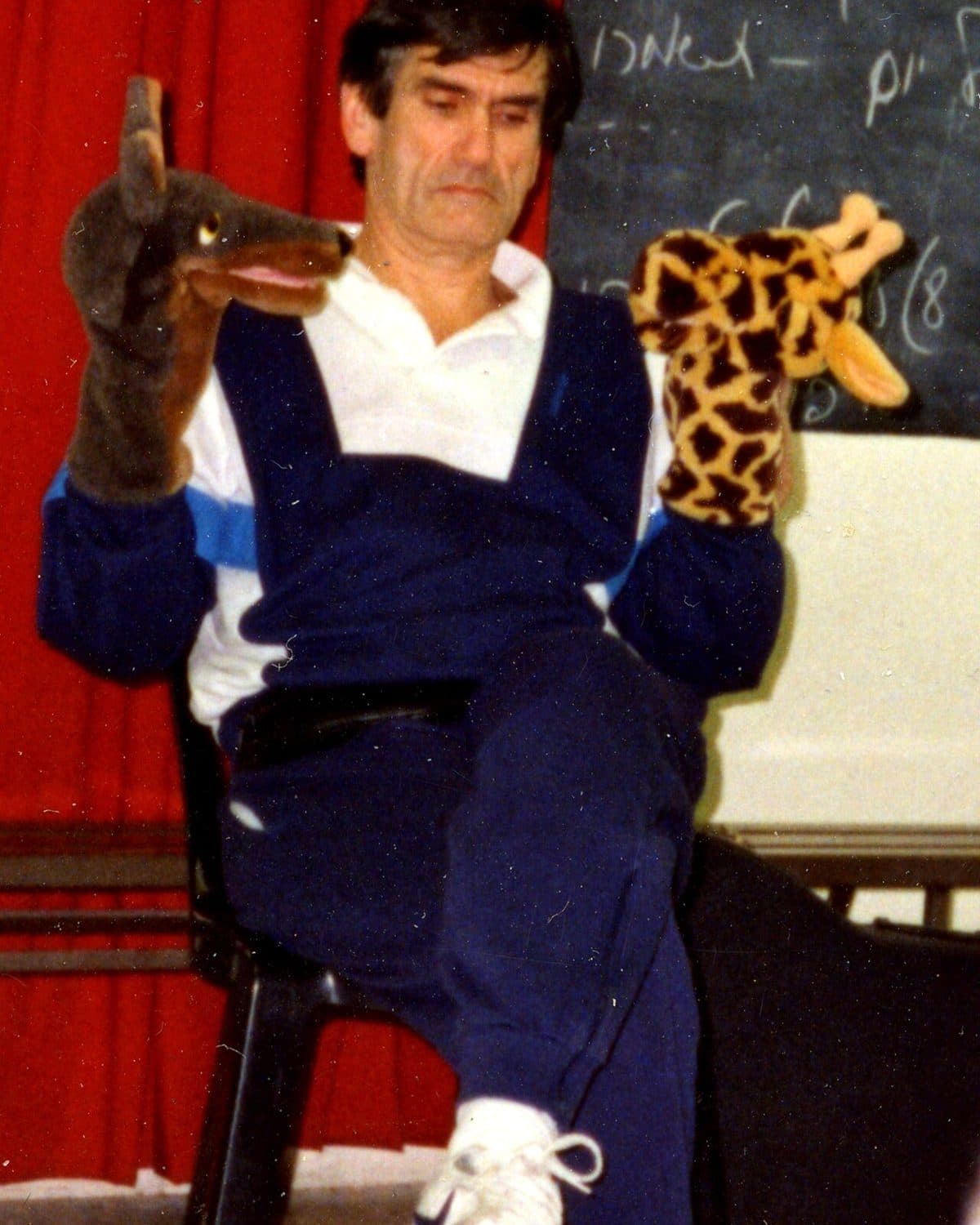
- Giraffe language and wolf languageWhere wolf and giraffe come from, plus ten sentence pairs and games for children
- Nonviolent Communication with childrenEight situations from family life, plus what changes with the child’s age
The core
The method does not change what somebody wants. It changes what the other person understands of it.
Sources
The steps
- ObservationDescribe what actually happened, without judgement. Not "you always leave me hanging" but "we agreed on eight and you arrived at half past nine". That difference decides whether the other person listens or defends themselves.
- FeelingName what it sets off. Disappointed, annoyed, uncertain. What matters is the difference between a feeling and a disguised accusation: "I feel ignored" describes the other person, not your own state.
- NeedSay what lies behind it: reliability, quiet, involvement, recognition. This step is the least familiar, and it is the one where the situation most often turns, because needs contradict each other less often than demands do.
- RequestA concrete, doable request for the next situation, not a general demand. "Tell me when you are running late" is a request; "be more reliable" is a judgement with a question mark.
More in this series
- De-escalationSchool, care work, transport, public services, volunteering, neighbourhoodA heated dispute cannot be ended with arguments. Only once the tension drops does the matter become negotiable again
- MediationFamily, workplace, neighbourhood, business, environmental and building projectsA third person guides the conversation and decides nothing. That is precisely why the result tends to hold afterwards
Frequently asked questions about Nonviolent Communication
Who developed Nonviolent Communication?
It was developed by the American psychologist Marshall B. Rosenberg, born on 6 October 1934, died on 7 February 2015. He grew up in Detroit and studied psychology under Carl Rogers. From the 1960s he worked on the model he called Nonviolent Communication, while taking part in the American civil rights movement. In 1984 he founded the Center for Nonviolent Communication. Until he retired in 2011 he gave trainings in more than 60 countries, according to the center.
Why is the method called nonviolent?
Rosenberg drew on Mahatma Gandhi and Martin Buber, among others. Violence here does not only mean physical violence but also the violence that can lie in language: judgements, reproaches, threats and punishment. Rosenberg saw a close link between violence and the way people think and speak. One sentence of his, quoted by the German Nonviolent Communication association, sums it up: the answer to the question of what causes violence lies in the way we have learned to think, to communicate and to deal with power.
Is Nonviolent Communication a technique or an attitude?
Both, but the attitude comes first. The four steps are a frame to practise with. Anyone who uses them only as a formula to make others behave in a certain way misses the core, according to Rosenberg. He describes the aim like this: it is not about changing other people and their behaviour, but about relationships based on honesty and empathy that meet the needs of everyone as far as possible. That is why a memorised NVC sentence often sounds wooden, while a sincere one does not.
What does empathy mean in Nonviolent Communication?
The German Nonviolent Communication association distinguishes two directions. Self-empathy means being in touch with your own feelings and needs here and now. Empathy towards others means understanding the feelings and needs of another person with sensitivity. The addition matters: understanding does not mean agreeing with everything the other person does. You can see why someone raises their voice and still say that you do not want to go on talking like this.
Which book by Rosenberg is a good place to start?
The foundational work is called “Nonviolent Communication: A Language of Life”; its German edition appeared in 2001 with Junfermann. It explains the four steps with many conversation examples. If you prefer an interview format, the German book “Konflikte lösen durch Gewaltfreie Kommunikation”, a conversation with Gabriele Seils published by Herder, is a shorter way in. The German Nonviolent Communication association lists both titles. A book does not replace practice, though, ideally in pairs or in a group.
How does Nonviolent Communication differ from I-messages?
Both put your own situation at the centre instead of a judgement about the other person. The I-message after Thomas Gordon has three parts: the behaviour that bothers you, its effect and your own feeling. Nonviolent Communication goes two steps further. It asks about the need behind the feeling and ends with a concrete request. So it says not only what is not working but also what would help. Both methods pair well with active listening, which covers the listener’s side.
From a procedure to a mission of your own
Every one of these methods was developed by people who had a dispute in front of them and wanted to handle it differently. The same stance is what it takes on a small scale: in a neighbourhood, a school, a club.
Find your peace mission