How wars ended
The Good Friday Agreement
After three decades of violence, two governments and eight parties agreed on an order that the public then voted on
Key points at a glance
- The Good Friday Agreement, also called the Belfast Agreement, was concluded on 10 April 1998 by the United Kingdom, Ireland and eight Northern Irish parties.
- It ended the Northern Ireland conflict, fought since 1968 between unionists, republicans and the state security forces, which cost around 3,500 lives.
- At its core is the principle of consent: Northern Ireland remains in the United Kingdom as long as a majority there wishes, and is governed jointly by both communities.
- On 22 May 1998, 71.1% of voters in Northern Ireland and 94.4% in the Republic of Ireland approved the agreement.
In numbers
30
years of conflict
some 3,500 lives lost since the late sixties
71%
approval in Northern Ireland
in the referendum of 22 May 1998
10
parties to the talks
two governments and eight parties
- Yes71.1%
- Other votes28.9%
The provisions
- Northern Ireland stays in the United Kingdom as long as a majority there wants it to.
- A Northern Ireland Assembly with a government in which both communities must be represented.
- A North-South Ministerial Council and a British-Irish Council.
- Decommissioning of armed groups and early release of prisoners.
- Police reform, human rights and equal treatment.
- Everyone in Northern Ireland may hold British or Irish citizenship, or both.
- 196916
- 1972480
- 1976297
- 1982111
- 1988104
- 199464
- 19959
- 19998
- Period
- June 1996 to May 1998
- Place
- Belfast
- Parties
- The governments of the United Kingdom and Ireland along with eight Northern Irish parties, chaired by the former US senator George Mitchell
- Outcome
- An agreement of 10 April 1998, confirmed by referendums in Northern Ireland and in Ireland on 22 May 1998
- Author
- Johannes Max Harms
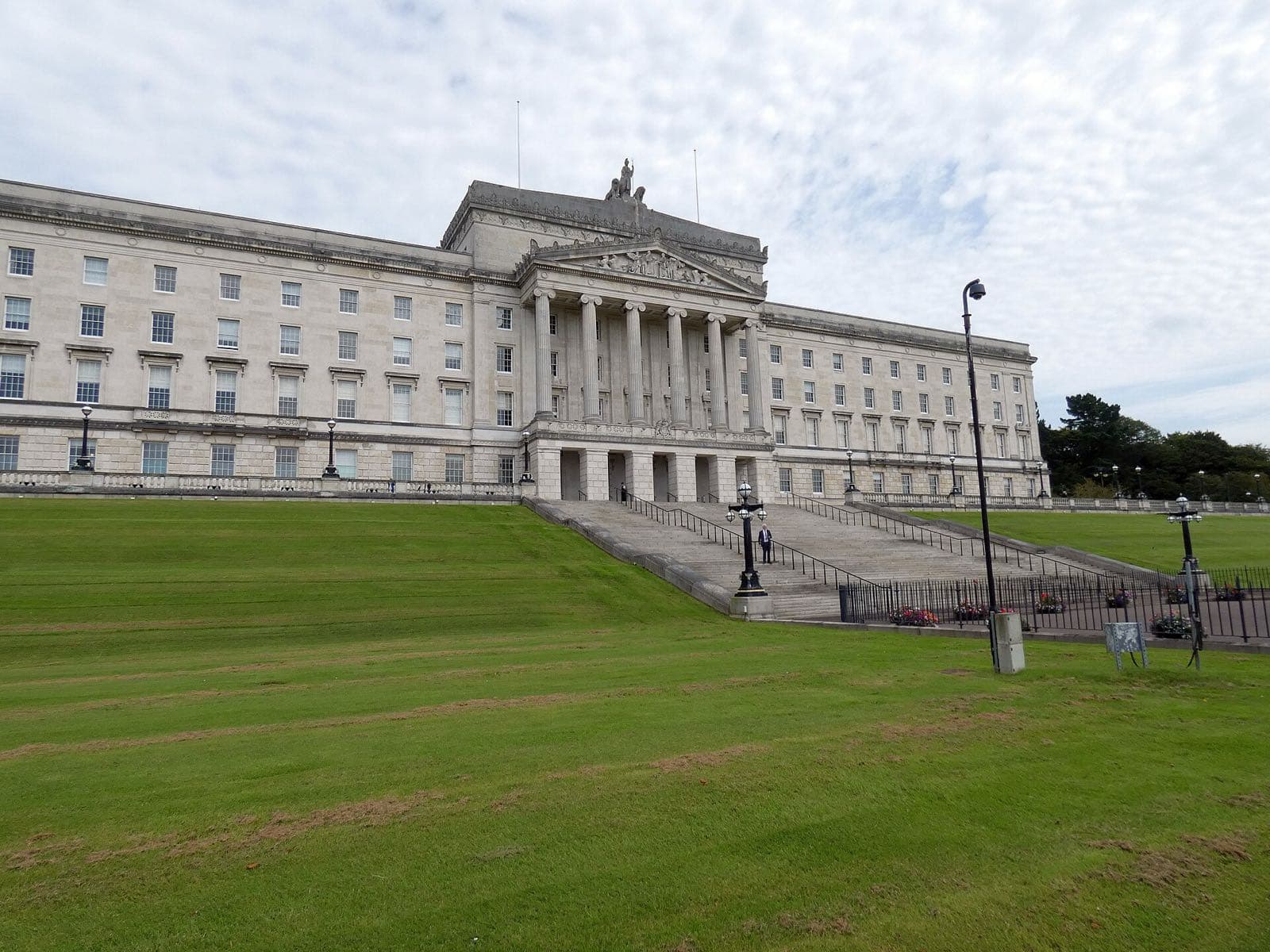
What was the Good Friday Agreement?
The Good Friday Agreement, also called the Belfast Agreement after the place it was made, was concluded on 10 April 1998 between the governments of the United Kingdom and Ireland and eight Northern Irish parties. It ended a conflict that had cost some 3,500 lives since the late sixties.
The dispute was about the constitutional status of Northern Ireland and about the standing of two communities towards each other. Both questions had been fought over for decades by armed groups on both sides and with the involvement of state security forces.
What is remarkable about the agreement is that it did not decide the question. It laid down that the status of Northern Ireland is for the people there to determine, and built institutions in which both sides have to govern together until they do.
Who negotiated, and who mediated?
At the table sat the two governments and eight parties, among them those seeking to remain in the United Kingdom and those seeking unification with Ireland. Not every party in the region took part, and some walked out during the process.
The chair was the former US senator George Mitchell. Outside mediation was the hinge of the procedure: it needed someone both sides trusted to favour neither, and who held the talks together when they were about to fail.
The ground had been prepared for years. The Downing Street Declaration of 1993 established that the question of status was for the people to decide. The ceasefires of 1994 made talks possible at all. The success of 1998 rests on that groundwork.
What was agreed?
First, the principle of consent: Northern Ireland remains part of the United Kingdom for as long as a majority of its people wish it. Change is possible, but only that way. The question was thus not decided but tied to a procedure.
Second, the institutions: a Northern Ireland assembly with an executive in which both communities must be represented, along with a North-South ministerial council and a British-Irish council. Governing happens jointly, which makes the parties dependent on one another.
Third, the everyday questions after a war: decommissioning of the armed groups, early release of prisoners, reform of policing, human rights and equality, and the right of every person in Northern Ireland to hold British or Irish citizenship, or both.
How long did the peace hold?
To this day. Violence did not return on the scale that had marked the three decades before, and the question of status has since been argued politically rather than by arms.
It has not been calm. The power-sharing executive was suspended several times and went unformed for years when the parties could not agree. Decommissioning dragged on until 2005. The agreement survived those crises because it fixed no state of affairs, only a procedure the parties could return to.
The two negotiators John Hume and David Trimble received the Nobel Peace Prize in 1998. More notable than the award is that the agreement was confirmed on 22 May 1998 in two referendums, with some 71 per cent in Northern Ireland and more than 94 per cent in Ireland. It rests on two votes rather than on signatures, the only agreement in this series to do so.
What is there to learn from it?
The key move is the separation of question and procedure. Which state Northern Ireland belongs to was not answered. What was answered is who decides it, and how. That let both sides sign without giving up their aim.
The second move is confirmation by the public. An agreement that has been voted on is harder to present as a betrayal by one's own leadership. The referendums were not decoration; they are why the result survived its crises.
The third is outside mediation. It took a chair both sides trusted to favour neither. That role cannot be filled from inside a conflict, and it is the point at which many negotiations never begin.
How did the conflict in Northern Ireland begin?
Its roots go back to the early seventeenth century. At that time Protestant English and Scottish settlers were systematically planted in the north-east of the traditionally Catholic island, and local people were dispossessed where necessary. In 1921 and 1922 the island was partitioned: the Irish Free State in the south, and in the north-east Northern Ireland, which remained part of the United Kingdom and whose political institutions were controlled by the Protestant majority.
In 1949 the south declared itself independent as the Republic of Ireland and broke its last ties with the British Crown. The Catholic minority in Northern Ireland was disadvantaged politically and economically for a long time. In Derry, constituency boundaries were drawn so that a Protestant majority sat on the city council despite a Catholic majority in the population. From 1968 there were repeated riots, and in 1969 they escalated into the three-day “Battle of the Bogside”.
This set off a spiral of violence that lasted three decades. In January 1972 soldiers in Derry shot dead 13 demonstrators on “Bloody Sunday”. In July of the same year nine people died in Belfast on “Bloody Friday” in reprisal attacks by the IRA. With 480 deaths, 1972 became the bloodiest year of the conflict. Both sides formed paramilitary groups, and the best known on the republican side was the IRA.
How were the police and armed groups reorganised?
The first priority after the agreement was to restore the state’s monopoly on the use of force. The discredited Royal Ulster Constabulary was renamed the Police Service of Northern Ireland and given a neutral badge. The British flag disappeared from police stations, the force was halved in size, special units were disbanded, and an ombudsman was appointed as an independent oversight body. Responsibility for policing and justice passed to Northern Irish authorities only in 2010 with the Hillsborough Agreement.
New posts were to be filled in equal shares by Protestant and Catholic applicants. According to a 2009 report by the Minister of State for Northern Ireland, the share of Catholics in the police rose from 8.3% in 2001 to 27.58%. The preferential recruitment of Catholics has since been discontinued. At the same time, more than 3,700 cases of murder and serious violence committed by police officers remain unresolved to this day.
Disarmament was slow too. In the agreement the parties undertook to use their influence so that all paramilitary arms would be decommissioned within two years of the referendums, monitored by an independent commission. Only in 2005 did an international commission of experts confirm that the IRA had completed the process. Prisoners from the groups involved were to be released early and, if circumstances allowed, freed at the latest two years after the scheme began.
What follows from it
The agreement did not end the dispute, it ended violence as a means within it. Since then the dispute runs through institutions.
Sources
- German Federal Agency for Civic Education: 25 years ago, the referendums on the Good Friday Agreement (in German)
- German Federal Agency for Civic Education, dossier on wars and conflicts: Northern Ireland (in German)
- CAIN, Ulster University: The Agreement, text of the agreement of 10 April 1998
- CAIN, Ulster University: Sutton Index of Deaths, deaths by year
- UK Government (GOV.UK): The Windsor Framework
How it unfolded
- From 1968What begins as a civil rights movement turns into a conflict that costs some 3,500 lives over three decades.
- December 1993The Downing Street Declaration of the British and Irish governments states that the question of status is for the people to decide.
- August 1994The IRA declares a ceasefire, and loyalist groups follow weeks later. Talks become possible.
- June 1996Multi-party talks open under the chairmanship of former US senator George Mitchell, an outside chair both sides trusted to favour neither.
- 10 April 1998The agreement is signed, on a Good Friday, after a night of talks that ran past the deadline set for them.
- 22 May 1998Referendums in Northern Ireland and in Ireland confirm the agreement. Only then does it rest on something more than signatures.
- December 1999The power-sharing executive takes office. In the years that follow it is suspended and restored several times.
- July 2005The IRA declares its armed campaign over. Decommissioning, settled in the agreement only in principle, is complete seven years after it.
More in this series
- The Dayton AgreementNovember to December 1995Three weeks sealed off on an air force base, and at the end not merely a ceasefire but the constitution of a state
- The Camp David AccordsSeptember 1978 to March 1979Thirteen days without an audience, a mediator who would not let the parties leave, and at the end the first peace between Israel and an Arab state
Frequently asked questions
Why is it called the Good Friday Agreement?
Because it was concluded on 10 April 1998, which was Good Friday. After the place where it was negotiated, it is also known as the Belfast Agreement. Strictly speaking it consists of two treaties: one between the two governments and eight Northern Irish parties, and a second between the United Kingdom and Ireland alone.
How many people died in the Northern Ireland conflict?
Around 3,500. The Sutton Index at Ulster University counts 3,532 deaths in total for the years 1969 to 2001. The bloodiest year was 1972, with 480 deaths. After the ceasefires of 1994 the number fell sharply, and for 1995 the index records nine deaths.
Is Belfast still divided?
In part. In Belfast, walls and fences still separate pro-Irish republicans and pro-British unionists. Politically, however, the formerly hostile communities have governed together since 2007. According to the Federal Agency for Civic Education (bpb), the division of Northern Irish society nevertheless persists a quarter of a century after the agreement.
What is the Windsor Framework?
An agreement between the United Kingdom and the European Union from February 2023. It adjusts the Northern Ireland Protocol of the Withdrawal Agreement, which was meant to avoid a hard border between Northern Ireland and Ireland. Goods intended only for Northern Ireland can enter without checks. Through the so-called Stormont brake, the Northern Ireland Assembly can in certain cases block new EU rules on goods.
What changed in the Irish constitution?
Ireland replaced Articles 2 and 3 of its constitution and, in the second treaty, recognised that Northern Ireland belongs to the United Kingdom. The constitution now states that everyone born on the island is entitled to be part of the Irish nation, and that a united Ireland can come about only by peaceful means with the consent of a majority in both parts of the island.
From history to a mission of your own
Every one of these treaties was the work of people who thought it could be done. The same stance is what it takes on a small scale: in a neighbourhood, a school, a club.
Find your peace mission